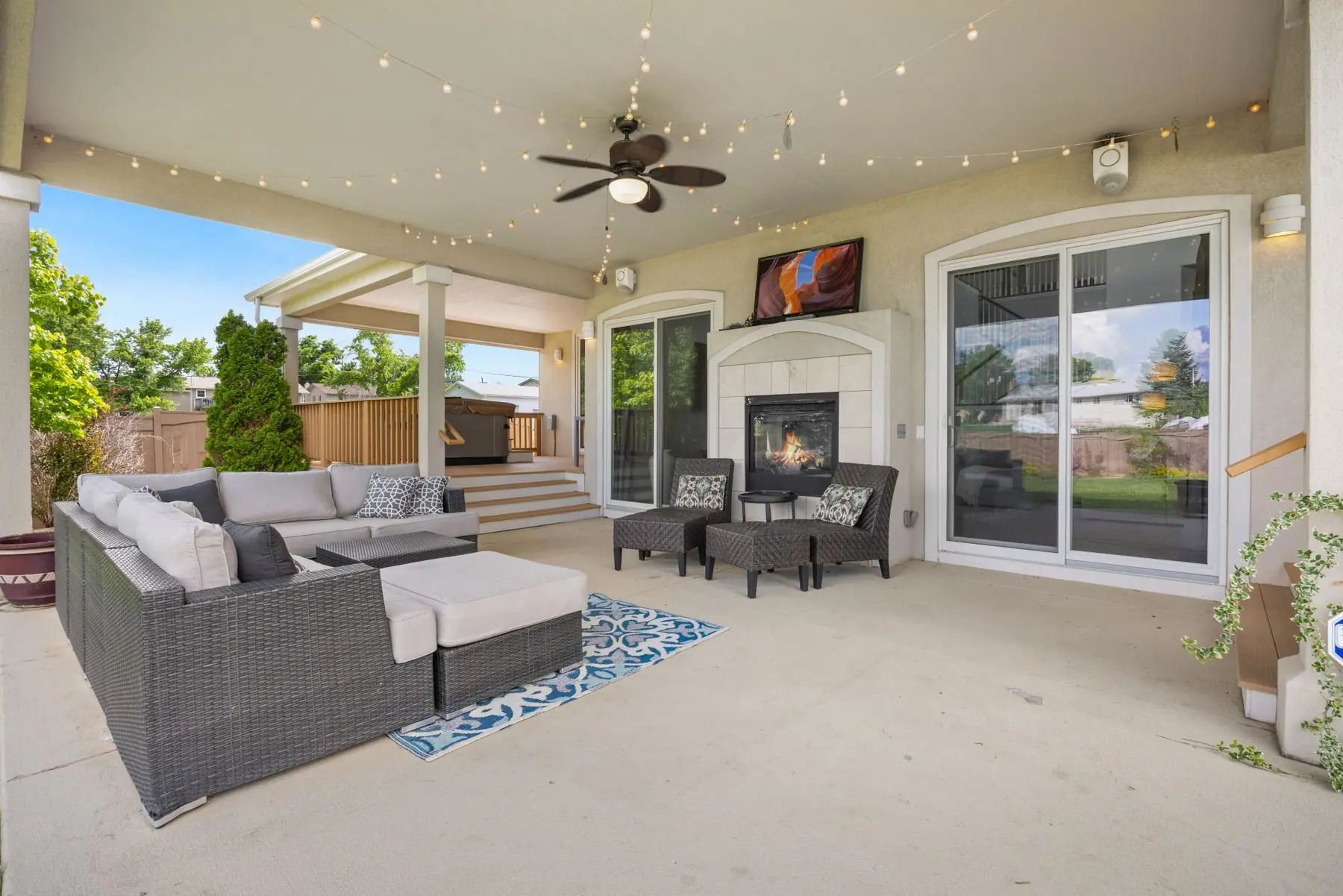
Should my fire pit or fireplace run on propane or natural gas?
If Southwest Gas already serves your house and a line can reach the spot, natural gas is the easier fuel to live with: no tanks, no refills. If the house has no gas service, or the pit sits far from the meter, propane is the practical choice. The burner has to be set up for one fuel or the other, so never connect a propane unit to natural gas or the reverse without the maker's conversion parts.
Phoenix Fireplace & Chimney · November 10, 2026
Start with what your house already has
Don't assume a gas line is anywhere near the patio. Census ACS data shows electricity is the main heating fuel in 74 percent of Phoenix homes, 76 percent in Mesa and 83 percent in Apache Junction. Utility gas heating is most common in the newer southeast and west Valley towns: 62 percent in Queen Creek, 51 percent in Goodyear and 50 percent in Maricopa.
A home that heats with electricity may still have gas for the water heater or range, so check for a Southwest Gas meter on the side of the house. If there is none, the choice is made for you unless you want to bring gas service to the property, which is a conversation with the utility, not with us.
Apache Junction stands out for a different reason: 4.0 percent of its homes heat with propane, the highest share among the towns we serve. Propane fireplaces and fire pits are more common there and on the rural edges of the Valley.
How the two fuels differ at the burner
Natural gas and propane are delivered at different pressures and burn at different air-to-fuel ratios, so the orifice, the valve setup and sometimes the air shutter are specific to the fuel. A fire pit or fireplace leaves the factory set for one. Switching requires the manufacturer's conversion kit, if one exists for that model, and should be done and tested by someone who works on gas appliances.
Propane is heavier than air. In a fire table that hides a tank in its base, the enclosure needs vent openings near the bottom so leaked gas cannot collect, and those vents need to stay clear of dust and debris. Natural gas is lighter than air and disperses upward.
Natural gas: higher upfront, easier after
Running natural gas to an outdoor pit or fireplace means extending a line from the house. HomeGuide's 2026 guide puts extending a gas line at $350 to $2,000, with distance, trenching through pavers or concrete and the number of fittings setting the price. The City of Phoenix lists new gas line installation for exterior gas appliances as permit work, and unincorporated Maricopa County runs a fast-track permit for a new gas line to a fire pit or fireplace. In other cities we check what your city requires.
After that, the fuel is simply there. No tank to haul to a refill station before guests come over, and no running out halfway through an evening.
Propane: simpler start, more upkeep
A propane pit can go almost anywhere, including a rental, a patio far from the meter, or a yard where trenching isn't allowed. The trade-off is tank handling, refills and a smaller tank inside many fire tables that empties faster than people expect.
Maricopa County has listed a program that pays up to $75 toward buying a propane fire pit, launched with the Arizona Propane Gas Association. The county page doesn't say whether it is still funded, so check whether it is still offered before you count on it.
- Pick propane when there is no gas service, the pit must be movable, or the run from the meter would be long and costly.
- Pick natural gas when a line is close, the pit is permanent and you plan to use it often.
Both are exempt on No Burn Days
Maricopa County's restricted-burn rules cover burning anything other than gaseous fuels, so a propane or natural gas fire pit can run on a No Burn Day, and the May to September ban on wood pits in Area A does not apply to either. In the Pinal County parts of the Valley, check Pinal County's own rules.
If you are converting a wood pit, the burner pan, burner and igniter are priced at the free site visit, and the fuel choice is the first thing we work out with you.
FAQ
More answers
Can I convert my propane fire pit to natural gas?
Only if the manufacturer offers a conversion kit for that model. The orifice and valve setup are fuel-specific, and the work should be tested for leaks and flame afterward.
Is propane or natural gas better for a fire pit?
Natural gas is more convenient when a line is nearby. Propane is the better fit when the house has no gas service or the pit sits far from the meter.
How much does it cost to run a gas line to a fire pit?
HomeGuide's 2026 guide puts extending an existing gas line at $350 to $2,000. Distance and what the trench has to cross make the biggest difference.
Keep reading
More from the blog
 Why does my newer Arizona home only have a gas fireplace, and can I make it burn wood?Bought a Valley home built after 1998 and found gas logs, not a wood fireplace? Here is the Arizona law behind it and why converting it to wood isn't allowed.
 Can I have a wood fire in my backyard fire pit during summer in Phoenix?Maricopa County bans recreational wood fires in backyard pits May 1 to Sept 30 in Area A. What it covers, the $200 minimum fine and why gas pits are exempt.
 What should I check before starting my gas fireplace after a Phoenix summer?Your gas fireplace sat through five months of heat. What to look at before the first cool night: glass, vent, pilot, flame, batteries and the CO alarm.
Book online
Pick a window. We'll bring the meter.
Free inspection in a 3-hour window: 8 to 11, 11 to 2, or 2 to 5, Sunday through Friday. We call to confirm before we head out.