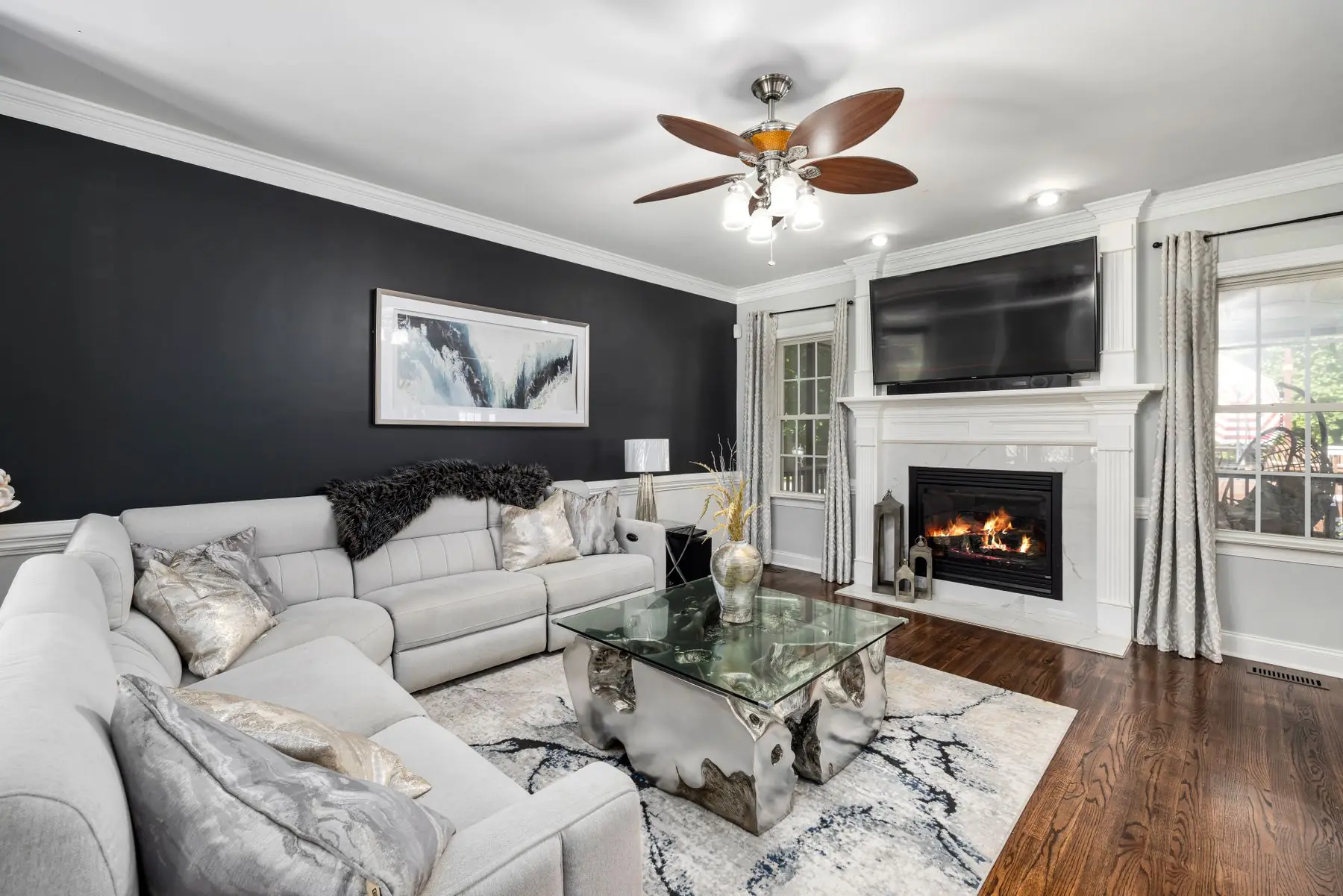
Gas Inserts and Wood-to-Gas Conversions for Older Valley Homes
A gas insert turns an old brick wood fireplace into a sealed heater that can run on a No Burn Day. HomeGuide's 2026 guide puts an installed insert at $2,000–$5,000 and a full wood-to-gas conversion at $1,500–$8,000.
Inserts are for houses that still have real wood fireplaces, and in this market those are mostly older homes. Census figures for 2020–2024 show 42% of Phoenix homes and 41% of Tempe homes were built before 1980, with Glendale at 35% and Mesa at 29%. Sun City is older still, with a median build year of 1973. Those brick fireboxes went in before the end-of-1998 state deadline that steered new Valley fireplaces to gas, electric logs or EPA-certified units, so many are still open wood burners with a cast-iron damper and a clay-tile flue.
An insert is a closed metal firebox with a glass front that slides into the old opening. It takes combustion air and sends exhaust through a liner run up the existing flue, so the room's air stays in the room. Compared with an open fireplace that pulls conditioned air up the chimney all year, the difference shows up in comfort as much as in looks.
Signs you need this
- You stopped using the fireplace because of No Burn Days
- Smoke, ash and stacking wood are more trouble than the fire is worth
- Drafts come down the chimney whatever the season
- The damper doesn't seal and the firebox walls look tired
- You want the room warmed, not just a flame to look at
How we do it
- Measure and inspectFree visit: firebox dimensions, flue size and condition, damper, gas availability and where a line would run.
- Pick the unitWe show inserts that fit your opening, explain heat output and controls for each, and write the price down.
- Liner, gas and fitLiner up the flue, gas brought to the firebox, insert set in, sealed and trimmed to the fireplace face.
- Commission itBurn test, flame and draft check, controls shown to you, and the old damper handled so it can't interfere.
Insert or gas logs: which conversion fits?
Gas logs are the lighter conversion: a burner and log set in the open firebox with the damper held open. They look like a wood fire and give modest heat. An insert is the heavier one, and the one that actually warms a room, because it is sealed and vented through its own liner. The wider conversion range, $1,500 to $8,000 in HomeGuide's 2026 figures, covers everything from a simple log set with a short gas run to a full insert with a long line and new face work.
Some older masonry fireplaces are too shallow, cracked or oddly shaped for an insert. We say so at the measuring visit, and logs may be the better fit there.
What if there is no gas line to the fireplace?
That is common. Electricity is the main heating fuel in most of the metro, 74% of Phoenix homes and 78% in Tempe by Census counts, so plenty of older houses have gas only at the water heater or range, or none at all. HomeGuide prices extending an existing gas line at $350 to $2,000, depending mostly on the distance and what the line has to pass through.
The City of Phoenix lists new gas piping and alterations to gas systems as permit work. Other cities have their own process. We check what your city requires before a line goes in.
Why convert at all, when it is rarely cold?
Because the nights you want a fire are the nights the county is most likely to ban wood. Maricopa County's Ordinance P-26 prohibits wood fireplaces on declared No Burn Days, with fines of $50, $100 and then $250 for repeat violations after a warning notice the first time. Gas, gas logs included, is exempt. A converted fireplace works every night the weather invites it.
Then there is summer. An open masonry flue with a leaky damper is a hole in the ceiling through months of air conditioning. A sealed insert closes it.
Inside the county retrofit boundary?
If your house sits in the part of central and west Phoenix covered by Maricopa County's Fireplace Retrofit Program, compare an insert with what the county offers before deciding. That program covers a gas log set, not an insert: the county says it will pay up to $2,000 per gas log set retrofit, through its own installer, for eligible homes with Southwest Gas service, a chimney cap and a working damper.
The program also asks owners to have the fireplace inspected and cleaned first, with a receipt saying it is safe for retrofit. We can do that visit, and fix a cap or damper that would keep you out of it. Check current availability with the county, since the page does not say whether funds remain.
FAQ
Gas Inserts & Wood-to-Gas questions
Gas logs vs gas insert: which should I get?
Choose logs if you mainly want the look of a fire in an open fireplace and use it now and then. Choose an insert if you want real heat and a closed, efficient firebox. Inserts cost more installed, but they stop the chimney from pulling room air.
How much does it cost to convert a wood fireplace to gas?
HomeGuide's 2026 guide puts a wood-to-gas conversion at $1,500–$8,000 and an installed gas insert at $2,000–$5,000, with $350–$2,000 more when a gas line has to be extended. Measuring and quoting is free.
Does a gas insert need a chimney liner?
Yes. An insert vents through a liner run the full height of the old flue and sized for that insert. Venting into a bare masonry flue lets the exhaust cool and condense inside it. The liner is part of the insert quote.
Can I convert my newer home's gas fireplace to burn wood?
In Phoenix, no. The city's 2024 residential code amendment says fireplaces built on or after December 31, 1998 with a gas or electric log insert may not be altered to burn wood or other solid fuel, and any alteration needs a city permit.
Is the old chimney checked before the insert goes in?
Yes. The flue, firebox and top of the chimney are inspected first, since an insert is only as sound as the masonry around it. If the flue needs a cleaning, that is priced at the same free inspection.
Related
Gas fireplaces, inserts and glass

Book online
Pick a window. We'll bring the meter.
Free inspection in a 3-hour window: 8 to 11, 11 to 2, or 2 to 5, Sunday through Friday. We call to confirm before we head out.