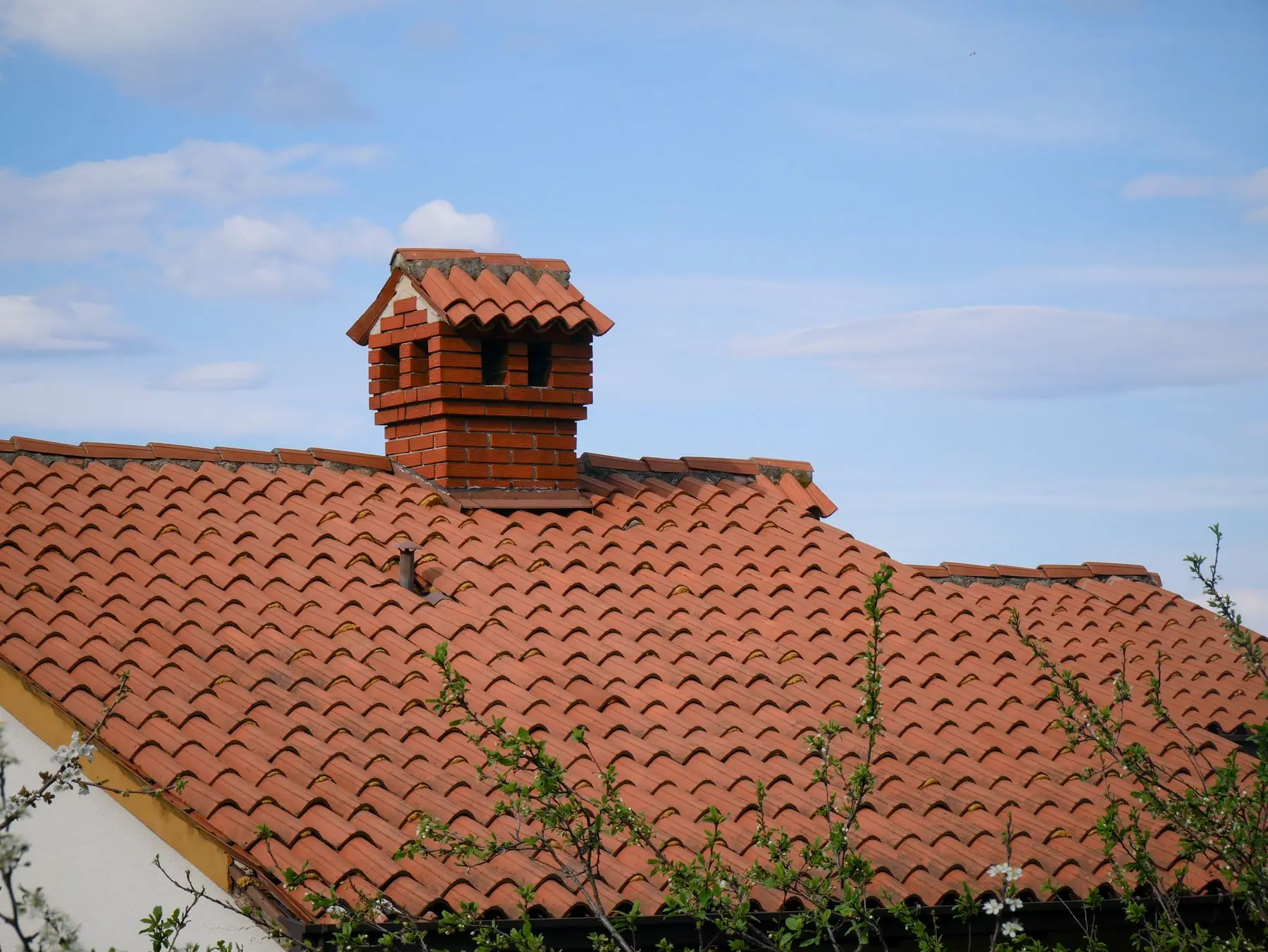
Chimney Flashing on Tile Roofs, Done From the Underlayment Up
On a Valley tile roof, the tiles shed most of the rain but the metal and underlayment beneath them stop the rest. When water shows up beside the chimney after a storm, that hidden layer is usually where it got through.
Short answer: if a ceiling stain appears next to the fireplace after a monsoon storm, and the inside of the firebox stays dry, the flashing is the first thing to suspect. Fixr's guide lists chimney flashing repair at $200 to $300. Work that involves taking up and relaying roof tiles around the chimney is priced at the free inspection, because it depends on how many tiles have to come off and whether any are cracked.
Tile is everywhere on Valley roofs, from older Phoenix and Mesa neighborhoods to the newer West and Southeast Valley suburbs. That roof works differently from shingles. The tile is a sun shield and a first rain screen; the waterproof layer is the underlayment and the metal pans and step pieces under it. Where a chimney or a framed stucco chase passes through, those pieces have to lap correctly with the underlayment, and the joint against the masonry or stucco has to stay sealed. Intense sun and heat age sealant and paint faster, so a joint that looked fine at the last roof check can open without anyone noticing.
Signs you need this
- A stain on the ceiling or wall right beside the chimney after rain
- Drips in the attic where the chimney or chase passes through the roof deck
- Cracked, cupped or pulled-away sealant where metal meets brick or stucco
- Roof tiles near the chimney that have slid, cracked or been knocked out of line
- Rust streaks or bent metal along the base of a stucco chase
How we do it
- Look from the attic firstAt the free inspection we check the roof deck around the chimney for water marks and soft wood, which tells us which side is taking water.
- Lift the tiles at the chimneyWe take up the tiles that touch the chimney so the metal and underlayment underneath can be seen and photographed.
- Replace what failedRusted or short pieces are replaced, the underlayment is patched and lapped the right way, and the joint against the masonry or stucco is resealed.
- Relay and testTiles go back in their courses, broken ones are swapped, and we run water on the area when the roof allows it to confirm the fix.
Why monsoon storms find flashing problems
Monsoon season runs from June 15 to September 30, and its storms rarely rain straight down. Wind pushes water sideways and uphill, into the gap between tile and chimney that a gentle winter rain never reaches. The National Weather Service lists microbursts and dust storms among the season's usual hazards, and gusts strong enough to shift a loose tile can open a path straight to the underlayment.
That is why a flashing leak can stay quiet for years and then show up in one August afternoon. The flaw was there; it only needed rain coming from the right direction.
Brick chimney or stucco chase: the details differ
On an older brick chimney in central Phoenix, Tempe or Sun City, the flashing should be step pieces tucked into the mortar joints and a counter layer over them. A bead of sealant smeared on the face of the brick is not a substitute, and it is one of the most common shortcuts we find.
On a newer home with a prefab fireplace, the chimney is a wood-framed chase wrapped in stucco. The flashing there has to tie into the weather barrier behind the stucco. If it does not, water runs down inside the wall and appears far from the roof, so a leak blamed on the window or the fireplace glass sometimes starts up top.
When the leak is not the flashing
A chimney leak has several possible entry points, and we check all of them before writing a price. Water inside the firebox usually points higher up: a cracked crown, a missing cap, or a rusted chase cover holding a pool of water. Damp brick on the inside wall can mean water soaking through the masonry itself.
- Cracked crown on a brick chimney: crown repair
- Rusted or dished metal top on a chase: chase cover replacement
- Open flue with no cap: chimney cap
- Brick that soaks up water: water repellent after repairs
FAQ
Flashing on Tile Roofs questions
Why does my chimney only leak during monsoon storms?
Because those storms bring hard, wind-driven rain that hits the chimney from the side. Small gaps in flashing or sealant that a light winter rain never reaches let water in when it is pushed sideways for twenty minutes.
Should I call a roofer or a chimney company for flashing?
Either can do it. The advantage of a chimney visit is that we also check the crown, cap and chase cover on the same trip, which are often part of the same leak.
How much does chimney flashing repair cost in Phoenix?
Fixr's guide puts chimney flashing repair at $200 to $300. Tile that has to be taken up and relaid is priced at the inspection, once we can see how much of the roof around the chimney is involved.
Can new sealant alone fix a flashing leak?
Sometimes, for a short while. If the metal is sound and only the sealant has cracked, resealing helps. If the pieces are rusted, too short or not lapped into the underlayment, sealant just covers the problem until the next storm.
Will you break my roof tiles?
Older concrete and clay tiles can be brittle, and a few may crack when lifted. We point out tiles that are already cracked before we start, replace any that break, and match the profile as closely as the available stock allows.
Related
Chases, caps, leaks and masonry

Book online
Pick a window. We'll bring the meter.
Free inspection in a 3-hour window: 8 to 11, 11 to 2, or 2 to 5, Sunday through Friday. We call to confirm before we head out.