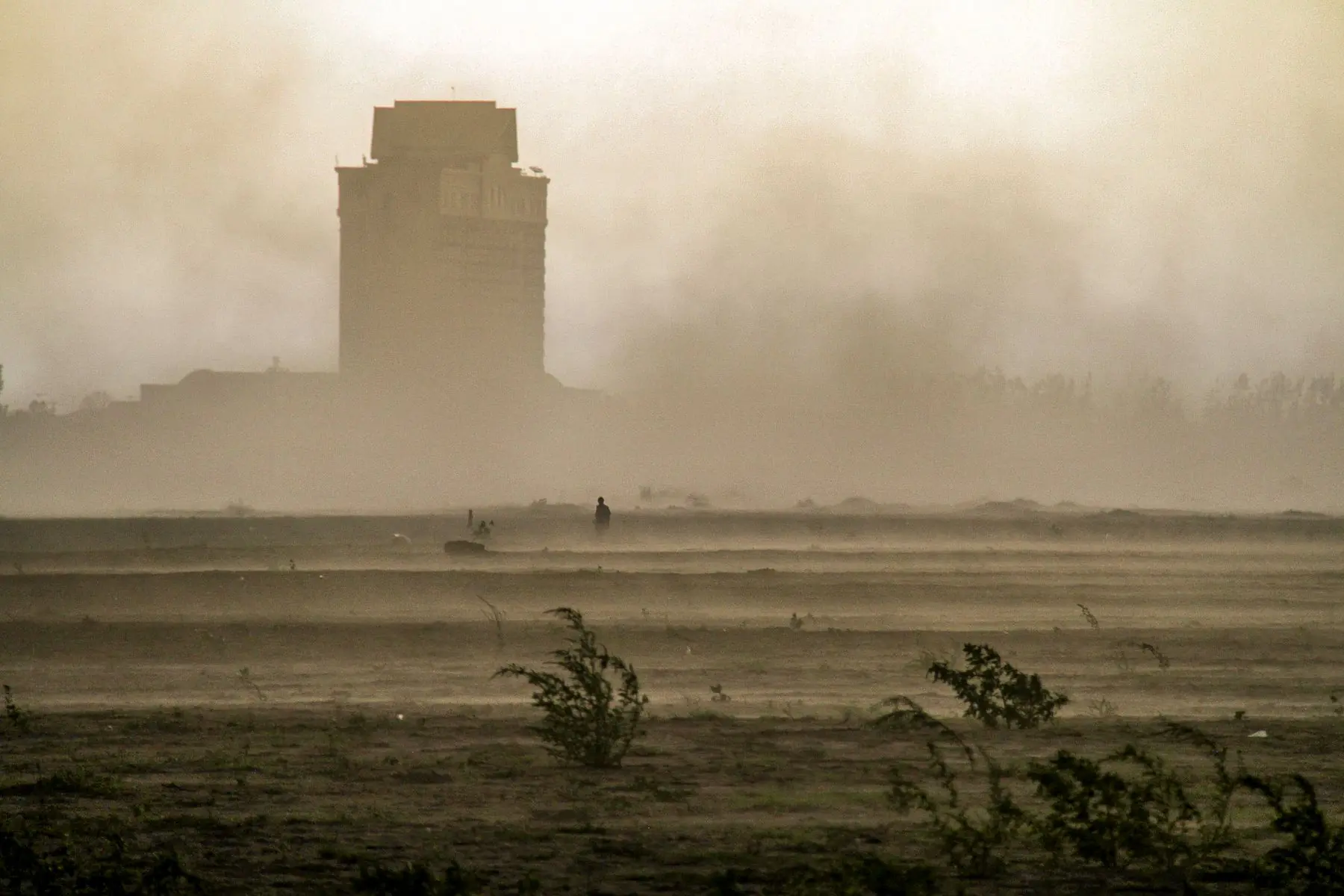
How do I clean a gas fire pit or outdoor fireplace after a haboob?
Shut the gas off and let everything cool, then lift out the fire glass or lava rock, brush and rinse it, and let it dry completely. Clear dust from the burner ports and the air openings with a soft brush, never a pin forced into a port, and blow out the area around the igniter and pilot. If the flame is weak, yellow and sooty, or it won't light, have the burner checked.
Phoenix Fireplace & Chimney · November 6, 2026
Why dust storms hit outdoor fire features so hard
The National Weather Service describes a haboob as an intense dust storm that can be lofted about 1,500 meters high, arriving as a wall of dust. An NWS technical memo says these storms reach Sky Harbor a few times a year on average, and they tend to come early in the monsoon season, which the NWS counts from June 15 to September 30.
A fire pit is an open bowl sitting in the yard. When a dust wall rolls through, fine silt settles into the media, sifts down into the burner pan, and coats the igniter and the flame sensor. Outdoor fireplaces collect it in the firebox and on the log set. Because most Valley owners don't light their outdoor gas features again until fall, that dust sits there for weeks or months, often joined by leaves, palm fiber and insects.
Step by step after the storm
Wait until the storm and any rain have passed. Work with the gas off at the valve or the propane tank, and with the burner cool.
- Remove the media. Scoop out fire glass, lava rock or ceramic pieces into a bucket.
- Rinse the media with a hose in a strainer or a mesh bag, then spread it on a tarp in the sun until it is completely dry. Wet lava rock can trap moisture, and wet media over a hot burner is not something to rush.
- Brush the burner. Use a soft brush or a shop vac on low to lift dust off the burner ring or pan and out of the ports. Don't force wire or pins into ports; that can widen them and change the flame.
- Clear the air openings. Many burners have an air mixer or intake below the pan. Silt and spider webs there are a common cause of a lazy yellow flame.
- Blow out the igniter and pilot area gently, and wipe the flame sensor or thermocouple tip with a dry cloth.
- Check the enclosure. If the pit hides a propane tank, make sure its vent openings are not blocked with dust or debris.
- Put the media back in a single, even layer. Piling it too deep over the burner chokes the flame.
Outdoor fireplaces and fire tables
An outdoor gas fireplace usually has a log set or a burner tray inside a masonry or stucco box. Lift the logs out in the order they came, take a photo first, and brush the burner and ember material. Putting logs back in the wrong spots is one of the most common reasons a fire looks thin or smokes the face of the box afterward.
Fire tables with a glass wind guard need the glass wiped and the gap at its base cleared, because dust packs into that channel.
Signs the dust went deeper than you can reach
Sometimes cleaning the surface is not enough. Silt can get into the gas valve area, the orifice or the electronic ignition module, especially on a pit that sat through more than one storm.
- It clicks or sparks but won't catch, even after cleaning.
- The flame comes up small, uneven or yellow and leaves soot on the media.
- It lights and then goes out after a minute.
- You smell gas while the burner is off. In that case, leave the area and call Southwest Gas at 1-877-860-6020 from a safe place.
What we do on a fire pit visit
Our burner diagnosis is free: we pull the media, light and test the burner, and look at the igniter, sensor, valve and air intake. Any repair is priced at the diagnosis. If the pit is past saving, HomeGuide's 2026 guide puts a new gas fire pit installed at $3,500 to $8,000, so it pays to keep the one you have running. A simple fitted cover, put on whenever a dust storm warning comes out, saves a lot of this work.
FAQ
More answers
Why is my gas fire pit flame yellow after a dust storm?
Dust and webs in the air intake or the burner ports starve the flame of air, so it burns yellow and sooty. Cleaning the intake usually helps; if it doesn't, the orifice or burner needs a closer look.
Can I hose off a gas fire pit?
You can rinse the media separately and gently rinse the outside of the pit. Avoid spraying water straight into the burner, igniter and controls, and let everything dry fully before lighting.
Should I cover my fire pit in Arizona?
Yes, when it's not in use, and especially in monsoon season. A cover keeps dust, rain and nesting insects out of the burner and media.
Keep reading
More from the blog
 Why does my newer Arizona home only have a gas fireplace, and can I make it burn wood?Bought a Valley home built after 1998 and found gas logs, not a wood fireplace? Here is the Arizona law behind it and why converting it to wood isn't allowed.
 Can I have a wood fire in my backyard fire pit during summer in Phoenix?Maricopa County bans recreational wood fires in backyard pits May 1 to Sept 30 in Area A. What it covers, the $200 minimum fine and why gas pits are exempt.
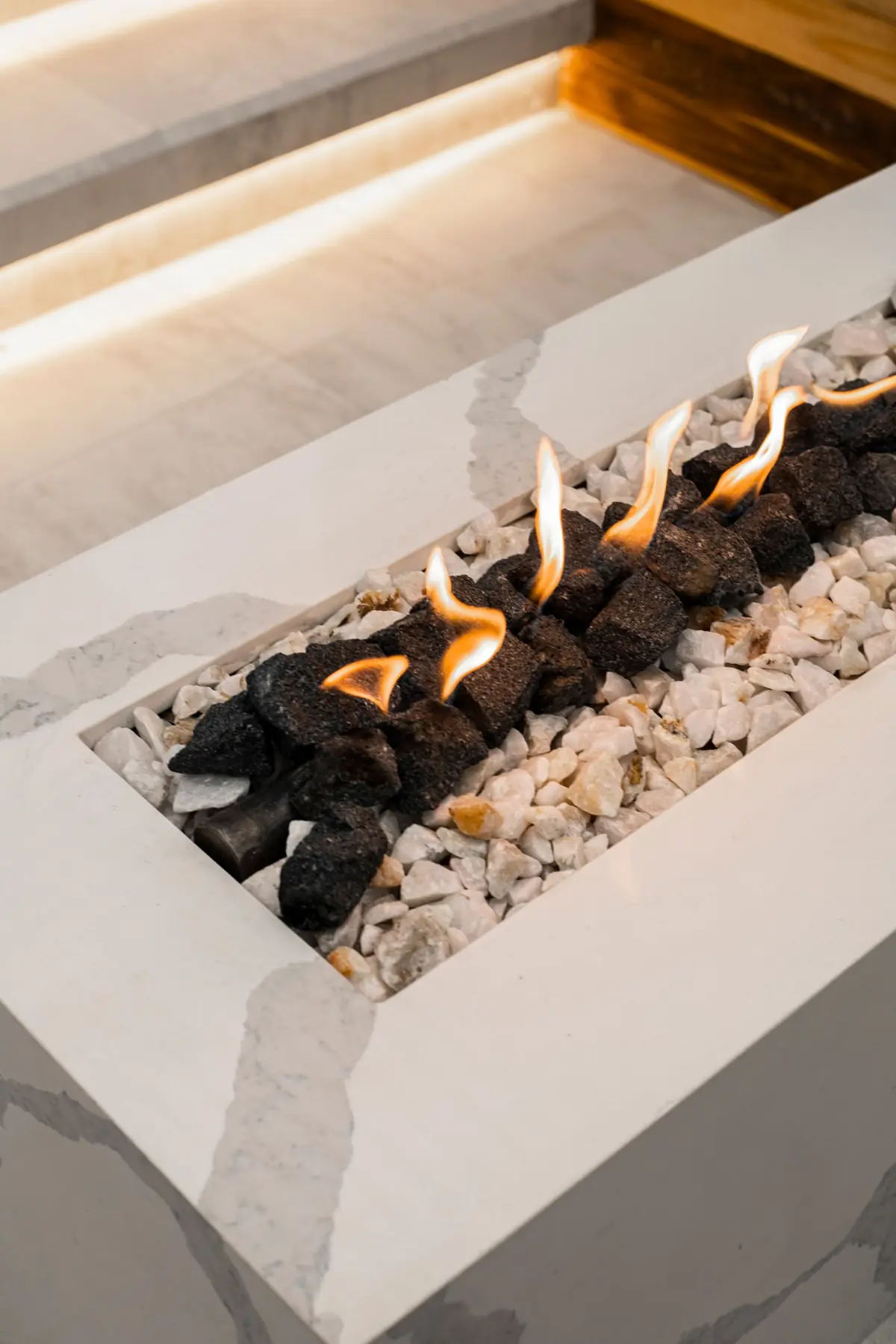 What should I check before starting my gas fireplace after a Phoenix summer?Your gas fireplace sat through five months of heat. What to look at before the first cool night: glass, vent, pilot, flame, batteries and the CO alarm.
Book online
Pick a window. We'll bring the meter.
Free inspection in a 3-hour window: 8 to 11, 11 to 2, or 2 to 5, Sunday through Friday. We call to confirm before we head out.