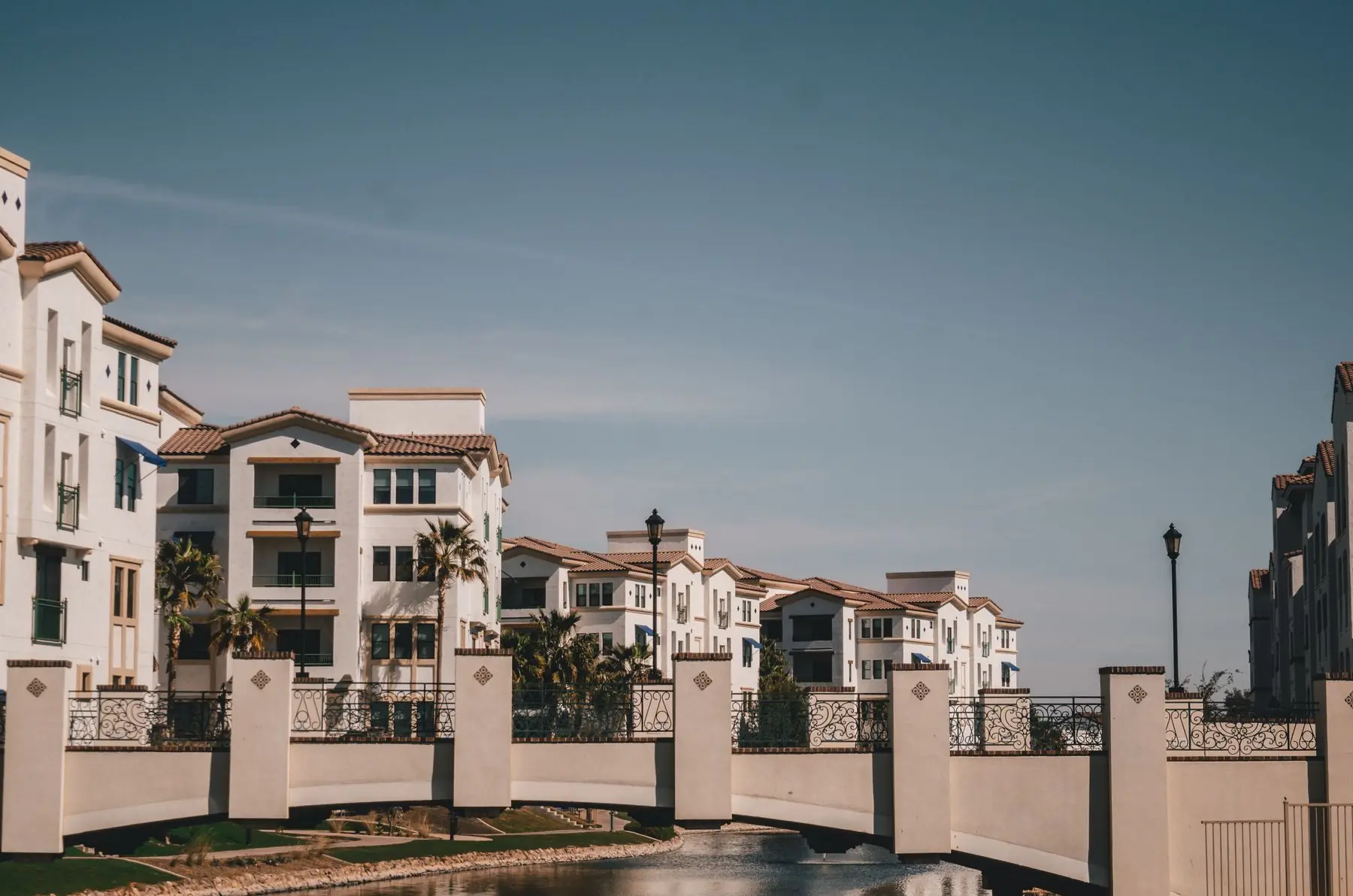
Fireplace and chimney service in the East Valley
Tempe and Mesa hold some of the oldest fireplaces in the Valley, and Apache Junction uses more propane than any town we serve. The inspection is free.
Tempe has the East Valley's oldest housing. The Census Bureau's 2020 to 2024 survey puts its median home at 1984 and counts 41 percent of homes as built before 1980, a point behind Phoenix. Mesa is younger and far larger, with a median year of 1989 and 41 percent of homes built between 1980 and 1999. Apache Junction, out against the Superstition Mountains, has a median of 1994.
Few East Valley homes heat with gas. Electricity is the main heating fuel in 78 percent of Tempe homes, 76 percent of Mesa homes and 83 percent of Apache Junction homes. So a fireplace here is often a brick wood-burner or an older factory-built box with no gas line anywhere near it, and the jobs reflect that: caps, dampers, firebox repairs and conversions, more than the run of gas-part repairs that fills a fall in the newer suburbs.
Tempe: rentals and brick fireplaces
Only 42 percent of Tempe homes are owner-occupied, the lowest share in the Valley towns we track, a sign of the rental market around Arizona State University. That changes who calls. It is often a landlord or property manager between tenants, wanting to know whether the fireplace in a 1960s or 1970s rental is safe to leave in service or should be closed off. Our free inspection gives the owner photos and a written record for the property file.
Common findings in these older houses are a damper that no longer closes, firebox brick with open joints, and smoke rolling into the room because the flue is partly blocked or the opening is too big for it. Firebox repair typically runs $150 to $1,000, and so does fixing a fireplace that smokes into the room. If an owner decides the fireplace has to go, removal typically runs $500 to $2,500.
Mesa: the 1980s and 1990s fireplace
Most Mesa fireplaces we see came with houses built in the 1980s and 1990s, before the 1998 rule. Many are factory-built wood-burning units: a steel firebox lined with refractory panels, a metal chimney, and a framed chase finished in stucco to match the house. Burning seasoned wood in them is allowed except on No Burn Days, but decades of heating and cooling crack the panels and rust the chase cover. Fixr prices a refractory panel at $100 to $300 each and a chase cover replacement at $300 to $700.
Converting one of these to gas is the most common upgrade question in Mesa, and the answer hangs on the gas line. Only 21 percent of Mesa homes heat with utility gas, so many have no gas near the living room. HomeGuide puts a gas line extension at $350 to $2,000 and a gas insert installed at $2,000 to $5,000. Mesa also keeps a stock of older brick fireplaces, with 29 percent of its homes built before 1980; if the flue shows signs of a hidden problem, a camera scan is priced at the inspection.
Apache Junction and Gold Canyon: propane and Pinal County
Apache Junction is the one town we serve where propane shows up clearly in the Census numbers: 4.0 percent of homes heat with it, the highest share on our list, against 11 percent on utility gas. Where a home has no natural gas service, a fireplace or fire pit often runs off a tank, in Apache Junction and in Gold Canyon alike. Propane appliances use different orifices and regulators than natural gas, so a unit bought used or moved from another house may be set up for the wrong fuel. We check that along with the igniter, pilot and supply line.
Most of Apache Junction and all of Gold Canyon lie in Pinal County, not Maricopa. Maricopa County's No Burn Day ordinance does not automatically apply there. Pinal County runs its own air-quality program, so check its rules before lighting a wood fire on a bad-air day. The part of Apache Junction inside Maricopa County follows the Maricopa rules, and we can tell you which county your address falls in when you book.
Heat, monsoon storms and the fall restart
In 2024 Phoenix logged 113 straight days of 100°F or hotter, from May 27 to September 16, the longest streak in the National Weather Service record. Fireplaces in Tempe and Mesa sit untouched through it. An uncapped brick flue spends those months open to dust and nesting birds, and a damper left open sends cooled air up the chimney. A chimney cap typically runs $200 to $850, and getting an animal out of a flue $600 to $1,500.
Monsoon season runs June 15 through September 30, and its storms drive rain sideways into masonry. Old brick soaks it up; a breathable water repellent, $150 to $400, slows that without trapping moisture inside. In Tempe and Mesa, Maricopa County's rules apply: no recreational wood fires or wood fire pits from May 1 through September 30 in Area A, and no wood burning on a declared No Burn Day, with gas exempt both times.
FAQ
East Valley questions
Is it illegal to burn wood in your fireplace?
In Tempe and Mesa, not on an ordinary day, as long as the wood is seasoned to 20 percent moisture or less and you never burn trash or painted wood. On a No Burn Day declared by Maricopa County it is, unless the device is an approved one; penalties run from a warning notice to $250. In the Pinal County parts of Apache Junction and in Gold Canyon, check Pinal County's rules.
Can I get an exemption if wood is my only heat?
Only in narrow cases. Maricopa County has issued no new sole-source-of-heat exemptions since December 31, 1995. Temporary exemptions exist for economic or health reasons, for up to 150 days, and for emergencies such as a broken heating system or an involuntary utility shutoff, by written application to the county.
How much does it cost to convert a wood fireplace to gas in Mesa?
HomeGuide's 2026 range for a full wood-to-gas conversion is $1,500 to $8,000, with a gas insert alone at $2,000 to $5,000. In Mesa the biggest variable is the gas line, since only about one home in five heats with utility gas; extending a line runs $350 to $2,000.
Why is my propane fire pit not getting gas?
Start with the tank level and the tank valve. Many propane hoses have an excess-flow safety that trips if the valve is opened quickly; close it, wait a minute and open it slowly. If the flame is still weak, a blocked orifice, a failing regulator or a dirty burner is next. Our diagnosis of outdoor burners is free and the repair is priced then.
What is included in a chimney inspection?
Ours is free and runs top to bottom: firebox, damper, flue or vent, crown or chase, cap, and flashing, with any gas unit lit and watched. We take photos and write a price for anything that needs work. If we suspect a hidden problem, a camera scan is priced at the inspection. A home-sale inspection is free too.
Book online
Pick a window. We'll bring the meter.
Free inspection in a 3-hour window: 8 to 11, 11 to 2, or 2 to 5, Sunday through Friday. We call to confirm before we head out.